
Application of Microbiology: Introduction
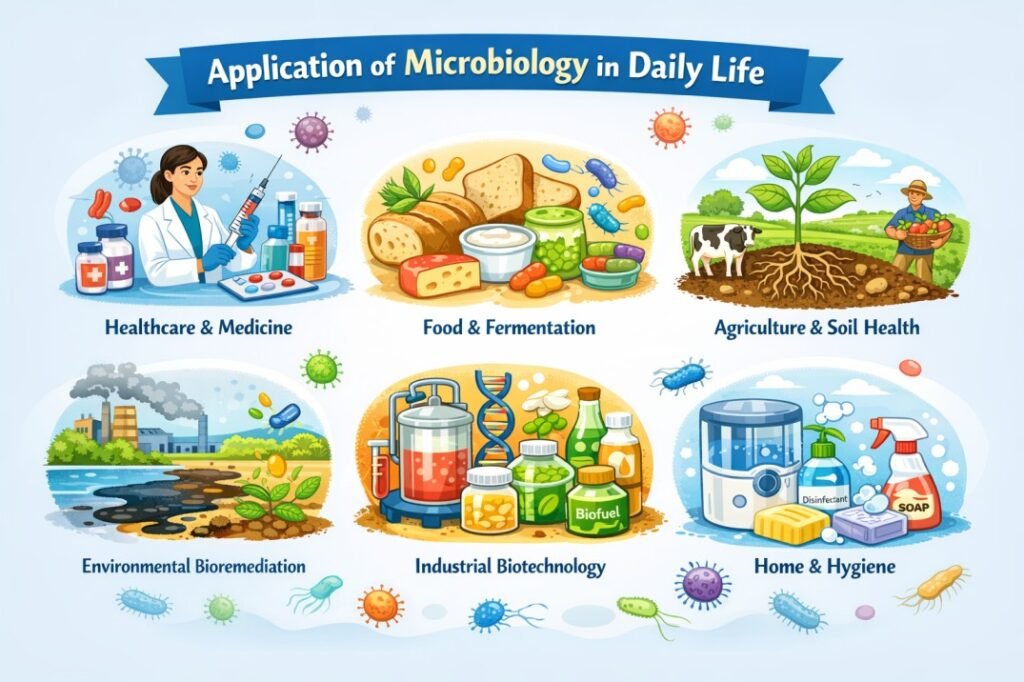
- The scientific study of microscopic organisms like bacteria, fungi, protozoa, algae, and viruses, which are invisible to the naked eye but perform a variety of vital functions, has a big impact on our daily routines.
- Despite their frequent association with illnesses, microbes are essential to the environment, agriculture, industry, and human health.
- Microbes affect every aspect of human civilization, from fermenting food and making medicine to purifying wastewater and increasing soil fertility.
- Today, a knowledge of microbiology enables us to advance public health, boost agricultural production, create environmentally friendly technologies, and maintain environmental quality.
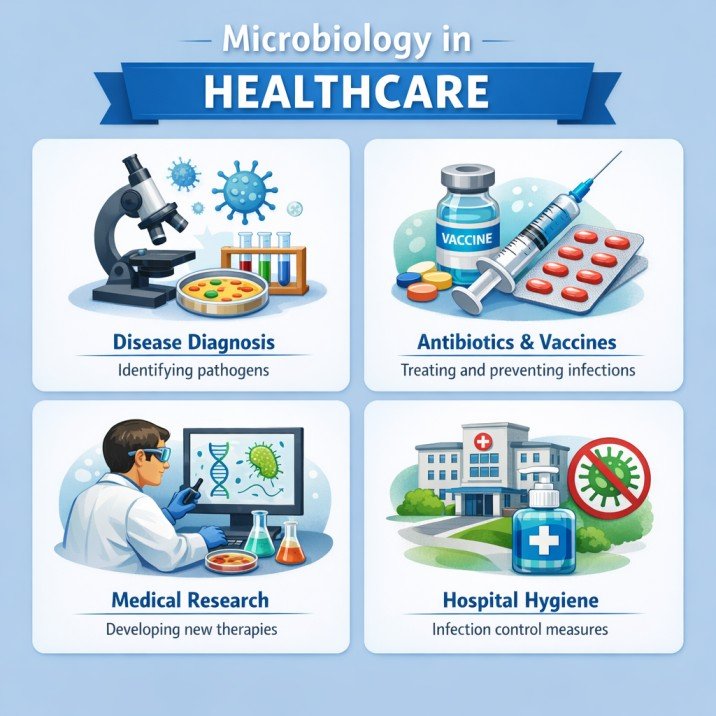
Role of Microbiology in Human Health
1. The Relationship Between the Human Microbiome and the Immune System
- The microbiome, which consists of trillions of microbes residing in the mouth, gut, skin, and other areas of the body, is hosted by the human body.
- These microorganisms support the immune system, aid in the breakdown of complex carbohydrates, and produce vital vitamins like vitamin K and B12.
- The gut flora keeps the intestines healthy and prevents the establishment of dangerous pathogens.
- According to research, gut bacteria also affect mood, stress, and cognitive function by interacting with the brain through the gut-brain axis.
2. Functional Foods and Probiotics
- Probiotic products that include beneficial bacteria such as Lactobacillus acidophilus and Bifidobacterium bifidum aid in digestion, prevent diarrhea, and aid in restoring the balance of the gut following antibiotic therapy.
- Probiotic yogurt and fermented meals, when eaten frequently, boost immunity and intestinal health.
3. Disease Prevention and Vaccines
- Microbiology forms the foundation of immunology.
- Vaccines against illnesses like polio, measles, hepatitis, and the flu are made using either microbes or their constituents.
- The mRNA vaccines used against COVID-19 also use molecular microbiology principles to elicit immunological responses without inducing infection.
4. Therapeutic Substances and Antibiotics
- Penicillin, which researchers discovered in Penicillium notatum, transformed medicine. Antibiotics from bacteria (such as Streptomyces species) and fungus now widely treat bacterial infections.
- Additionally, scientists use microbes to create anticancer, antiviral, and antifungal chemicals.
5. Microbial Diagnostics
- Through staining, culturing, biochemical testing, PCR, and serological assays, clinical microbiology labs are able to identify disease-causing microorganisms.
- As a result, doctors are able to manage infectious disease epidemics and administer appropriate therapy.
Application in Food and Nutrition
1. Fermented Foods
- One of the earliest biotechnological methods for preserving and improving food is fermentation.
- Microorganisms convert sugars into acids or alcohols, which enhance taste, texture, and shelf life.
Examples include:
- In yogurt and cheese, Lactobacillus bulgaricus.
- In bread and wine, Saccharomyces cerevisiae is present.
- Pickles and sauerkraut contain Leuconostoc
- soy sauce and miso contain Aspergillus oryzae.
- In addition to having a better flavor, these foods also have healthy microorganisms that boost nutrient absorption and gut health.
2. Food Preservation and Safety
- To prevent microbial spoilage, microbiology aids in the development of preservation techniques like refrigeration, pasteurization, canning, and acidification.
- Pathogens such as Salmonella, Listeria monocytogenes, and E. coli O157:H7 are identified by microbial testing, which promotes food safety.
3. Functional and Probiotic Beverages
- Probiotics are now included in juices, smoothies, and fermented plant-based beverages, in addition to dairy products.
- These beverages offer health benefits like lessening lactose intolerance, decreasing cholesterol, and promoting better digestion.
4. Quality Assurance in the Food Industry
- Food microbiologists monitor microbial contamination during manufacturing, packaging, and storage to ensure adherence to hygiene and safety regulations.
- Hazard Analysis and Critical Control Point (HACCP) Microbiological testing is used in systems to ensure product safety.
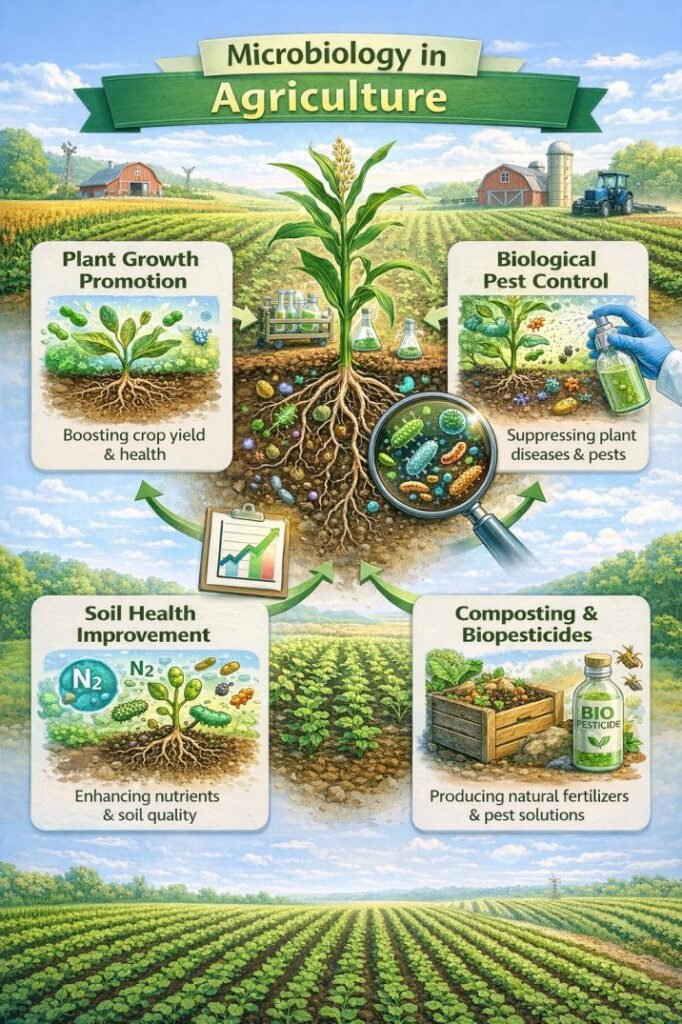
Agricultural Applications of Microbiology
1. Nitrogen Fixation and Soil Fertility
- Nitrogen-fixing bacteria such as Rhizobium, Azotobacter, and Azospirillum convert atmospheric nitrogen (N₂) into ammonia (NH₃), which plants can utilize.
- This encourages sustainable agriculture while decreasing reliance on chemical fertilizers.
2. Phosphate Dissolution
- By releasing organic acids that transform insoluble phosphates into forms that plants can utilize, phosphate-solubilizing bacteria (Bacillus, Pseudomonas, Aspergillus) enhance root development and production.
3. Biological Pest Control
- Microbes like Bacillus thuringiensis (Bt) serve as organic insecticides. Bt toxins are a safer alternative to chemical pesticides because they specifically target pest larvae without affecting people or helpful insects.
4. Composting and Organic Waste Management
- Fungi and bacteria break down organic wastes into humus-rich compost.
- Nutrients recycle through composting, which also enhances soil structure and water retention.
5. Plant Growth Promotion
- Some plant growth-promoting rhizobacteria (PGPR), such as Bacillus subtilis and Pseudomonas fluorescens, produce phytohormones (IAA, gibberellins), siderophores, and antibiotics that promote plant growth and inhibit soilborne diseases.
6. Carbon and Biological Nitrogen Cycles
- Microorganisms play a role in the recycling and decomposition of organic material, producing mineral nutrients and carbon dioxide that are vital for plant growth and preserving the stability of ecosystems.
Biotechnological and industrial applications
1. Production of Enzymes
- Microbial fermentation is used to make industrially significant enzymes like amylases, proteases, cellulases, and lipases.
- These enzymes are used in the paper, textile, detergent, and food industries to promote reactions in environmentally safe environments.
2. Antibiotics, Vitamins, and Hormones
- Different antibiotics (penicillin, streptomycin, tetracycline) and vitamins (riboflavin from Ashbya gossypii, vitamin B12 from Propionibacterium) are made using microorganisms.
- Human insulin and growth hormones are produced by genetically modified bacteria such as E. coli, making them a safe and cost-effective therapy.
3. Fermentation Industries
- Dairy (cheese, yogurt), bakery (bread, cakes), distillation (ethanol), and brewing (beer, wine) all depend on microbes.
- Mass production in industrial fermentation employs regulated settings and optimized microbial cultures.
4. Bioplastic and Biopolymer Production
- Some microorganisms produce biodegradable polymers like polyhydroxyalkanoates (PHAs), which are environmentally friendly replacements for petroleum-based plastics.
- Ralstonia eutropha and Alcaligenes latus are two such bacteria.
5. Biotechnology and Genetic Engineering
- Using recombinant DNA technology, genes can be introduced into microorganisms to produce biofuels, vaccines, and therapeutic proteins.
- Microbiological concepts underpin methods like cloning, PCR, and CRISPR-Cas9.
6. Biofuel Production
- Organic waste is transformed into biofuels like ethanol, methane, biodiesel, and hydrogen by microorganisms.
- Biogas, which is widely used in rural homes for heating and cooking, is produced by the anaerobic digestion of methanogenic bacteria.
7. Textile and Leather Industry
- Microbial enzymes, such as proteases and lipases, are used to soften fabrics, remove hair from hides, and degrease leather, replacing harsh chemicals and lowering pollution.
Environmental Applications
1. Treatment of Wastewater
- Organic waste is broken down into harmless end products by microbial consortia in sewage treatment facilities.
- The process involves the breakdown of organic material by aerobic bacteria, with anaerobic microorganisms creating methane as a byproduct.
2. Bioremediation
- Some microorganisms have the ability to break down or counteract environmental contaminants.
- For instance, Desulfovibrio species are able to detoxify heavy metals, while Pseudomonas putida breaks down hydrocarbons from oil spills.
- The most popular method for remediating polluted water bodies and soils is bioremediation.
3. Composting and Waste Degradation
- Kitchen garbage, plant waste, and sewage sludge are transformed by bacterial and fungal decomposers into nutrient-rich compost that replenishes soil fertility.
4. Biogeochemical Cycling
- Microbes are responsible for maintaining vital cycles like carbon, nitrogen, sulfur, and phosphorus, which helps to keep ecosystems in balance.
- Methanogens, nitrifiers, and denitrifiers are responsible for the world’s nutrient availability and gas exchange regulation.
5. Microbial Bioindicators
- Specific microorganisms can be used as indicators of water quality or pollution.
- The presence of E. coli in water indicates fecal contamination, for instance.
- Environmental monitoring and policy choices are informed by such microbial indicators.
Applications in Daily Home Life
1. Personal Hygiene and Sanitation
- Microbiological principles are used to create antiseptics, disinfectants, and hand sanitizers in order to reduce the transmission of pathogens.
- Alcohol-based sanitizers denature proteins and kill microorganisms, but soap works by interfering with microbial cell membranes.
2. Household Cleaning and Waste Management
- Microbe-derived, enzyme-based cleansers aid in eliminating stains, grease, and odors in houses.
- Microbial breakdown is the basis for household garbage separation and composting.
3. Microbes in Household Products
- The manufacture of scents, detergents, cosmetics, and biodegradable cleaning chemicals uses microbes or their byproducts.
- Biosurfactants made by Bacillus and Pseudomonas species are safer substitutes for manufactured compounds.
4. Microbial Fuel Cells in Smart Homes
- Recent developments include microbial fuel cells, which employ bacteria to convert organic waste into electricity and hold promise for sustainable home energy systems.
5. Water Purification
- To eliminate pollutants and provide safe drinking water, microbiological techniques are utilized.
- Biofilters use helpful bacteria to break down organic contaminants in storage tanks and aquifers.
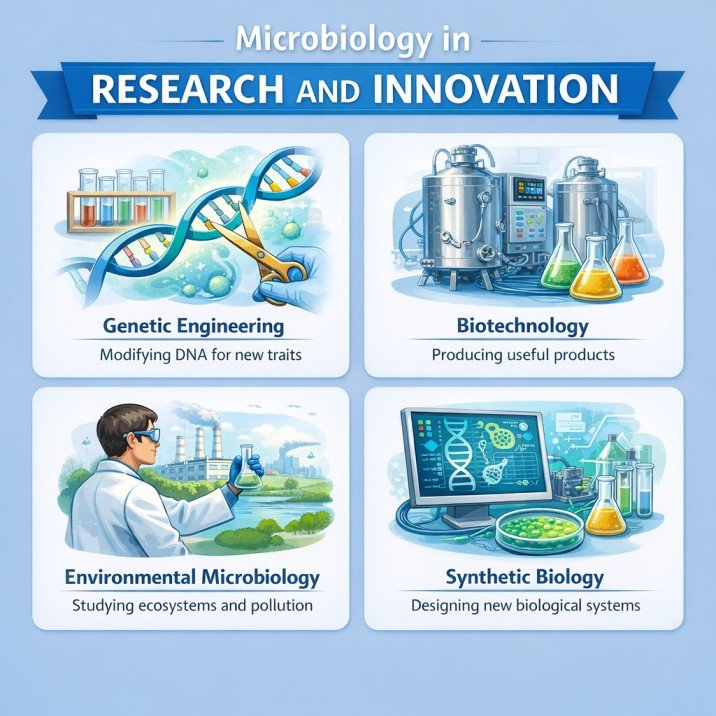
Microbiology in Research and Innovation
1. Drug Discovery and Medical Research
- Microbes function as model systems for researching cellular processes, metabolism, and genetics.
- Advances like recombinant protein synthesis and CRISPR gene editing were made possible by research on microbial genes.
2. Industrial Strain Improvement
- Microbial strains are enhanced for increased yield, stability, and efficiency in the production of enzymes, vitamins, and biofuels using genetic engineering and mutation.
3. Space Microbiology
- To learn about survival strategies in harsh environments and how microbes may be utilized to recycle waste during extended space missions, they are studied under space conditions.
Conclusion
Microbiology plays an indispensable role in daily life by supporting human health, improving food production, enhancing agriculture, and maintaining environmental balance. Microorganisms act as invisible allies that contribute to nearly every aspect of modern living.
From probiotics and antibiotics to biofuels and bioplastics, microbiology offers sustainable solutions to global challenges such as climate change, food security, and pollution. As scientific advancements continue, the responsible use of microbes will be key to building a healthier and more sustainable future.
Frequently Asked Questions (FAQs)
Q1. What is microbiology in daily life?
It refers to how microorganisms are used in food, health, agriculture, and industry.
Q2. How are microbes useful in food?
They help in fermentation, preservation, and improving nutrition.
Q3. What are probiotics?
Beneficial bacteria that improve gut health and digestion.
Q4. How do microbes help in agriculture?
They improve soil fertility, fix nitrogen, and protect plants.
Q5. What is bioremediation?
Use of microbes to clean environmental pollutants.
Q6. Why is microbiology important?
It helps in health, food production, environment protection, and biotechnology.
Reference and Sources
- https://www.news-medical.net/life-sciences/Microbiology-in-Everyday-Life.aspx
- https://www.geeksforgeeks.org/biology/real-life-applications-of-microbiology/
- https://www.ncbi.nlm.nih.gov/books/NBK560448/
- https://www.ncbi.nlm.nih.gov/books/NBK559436/
- https://www.internationalscholarsjournals.com/articles/human-microbiomes-and-their-applications-in-daily-life.pdf
Also Read
