
Introduction: Role of Microbes in Biofuel Production
- Biological materials like plants, algae, and microbes are used to make biofuels, which are renewable energy sources.
- They lessen greenhouse gas emissions and reliance on finite resources by acting as viable substitutes for fossil fuels.
- Biohydrogen, biodiesel, biogas, and bioethanol are examples of common biofuels that may be utilized for transportation and power production.
- In biofuel production, microbes play a crucial role by using lipid accumulation, fermentation, and anaerobic digestion to transform biomass into energy-rich molecules.
- Microbial biofuel production has a lot of potential for providing clean and sustainable energy in the future because of breakthroughs in biotechnology and genetic engineering.
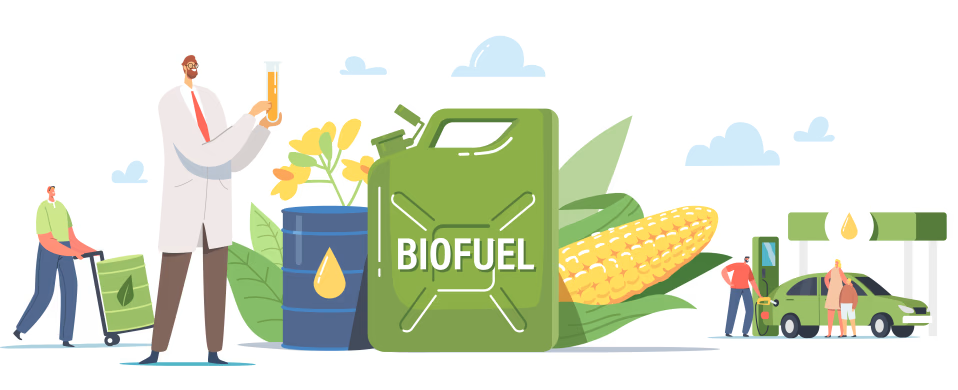
Types of Biofuels
Based on their source materials and the conversion techniques employed, biofuels are divided into several categories. The main categories are as follows:
1. Bioethanol
- Bioethanol is a fuel with alcohol that is made by the microbial fermentation of sugars or starches found in plants like wheat, maize, sugarcane, and other biomass.
- For the production of ethanol, some yeast and bacteria, such as Saccharomyces cerevisiae and Zymomonas mobilis, are widely used.
- Lignocellulosic biomass can be made from wood chips, agricultural leftovers, or grasses. May also be transformed into ethanol through enzymatic hydrolysis, which liberates fermentable sugars.
2. Biodiesel
- Natural oils and fats, such as vegetable oil, animal fat, or algal oil, are used to make biodiesel. Through a process called transesterification.
- Lipids (triacylglycerols) that have been gathered by microbes such as algae, yeast, and some bacteria are transformed into biodiesel.
- Because of their high lipid content and quick growth rate, microalgae are especially promising for use in the production of algal biodiesel.
3. Biogas
- The anaerobic digestion of organic materials like food trash, excrement, and sewage yields biogas, which is primarily, composed of methane (CH₄) and carbon dioxide (CO₂).
- This process involves a group of microbes that break down complicated organic materials into biogas in stages, including hydrolysis, acidogenesis, acetogenesis, and methanogenesis.
4. Biobutanol
- Clostridium species, notably Clostridium acetobutylicum, are utilized in the fermentation of sugars to create biobutanol, a modern biofuel.
- Ethanol is an inferior engine fuel since it has a lower energy density and blends better with gasoline.
5. Biohydrogen
- Hydrogen gas may be produced as a metabolic by-product by some cyanobacteria, photosynthetic bacteria, and fermentative microorganisms.
- Biohydrogen is a sustainable fuel source since it produces only water when burned.
6. Further Cutting-Edge Biofuels
- Fourth-generation biofuels comprise hydrocarbons and synthetic fuels created by genetically modified microbes that can transform carbondioxide or waste biomass directly into fuel molecules resembling gasoline or diesel.
Role of Microbes in Biofuel Production
- The creation of biofuels depends heavily on microorganisms, which are involved at every stage of the process, from the breakdown of biomass to the conversion of biomass into high-energy molecules.
- They are vital to the production of sustainable fuel because of their metabolic flexibility and variety.
1. Biomass breakdown
- A wide variety of hydrolytic enzymes, such cellulases, hemicellulases, amylases, and lipases, are produced by microbes such as bacteria and fungi, and these enzymes break down fats, complex carbs, and the breakdown of biomass lignin into basic fatty acids or sugars.
- Trichoderma reesei and Aspergillus niger, for instance, are widely recognized for their capacity to break down cellulose effectively.
2. Fermentation and Transformation
- The sugars produced by biomass degradation are transformed by fermentation microbes into alcohols and organic acids.
- Clostridium species are employed in the fermentation of butanol and acetone-butanol-ethanol (ABE), whereas Saccharomyces cerevisiae and other yeasts are essential microbes in the fermentation of ethanol.
- The basis of the synthesis of bioethanol and biobutanol is these processes.
3. Anaerobic Digestion
- Organic waste is converted into biogas by a group of anaerobic microorganisms.
- Methanogenic archaea, like Methanobacterium and Methanosarcina, further convert the volatile fatty acids produced by the hydrolytic and acidogenic breakdown of large molecules into methane and carbon dioxide.
4. Lipid Accumulation for Biodiesel
- Some bacteria (Rhodococcus opacus), yeasts (Yarrowia lipolytica), and microalgae are able to accumulate significant quantities of lipids in nutrient-depleted environments.
- These lipids can be processed and extracted to make biodiesel, a sustainable substitute for petroleum-based diesel.
5. Production of Hydrogen
- Through photo fermentation and dark fermentation, microbes like Rhodobacter sphaeroides and Clostridium butyricum are able to produce hydrogen gas.
- This microbial hydrogen is seen as a clean energy source with significant prospects for use in fuel cells.
6. Genetic Engineering and Synthetic Biology
- Scientists can use contemporary biotechnology to design microbial strains that increase fuel output, boost tolerance to inhibitors, and broaden the range of substrates they can utilize.
- For instance, recombinant bacteria can ferment both hexose and pentose sugars from lignocellulosic biomass, boosting the effectiveness of biofuel manufacturing.
7. Waste Use and Sustainability
- Agricultural leftovers, food waste, and wastewater may all be utilized as substrates by microbes, which helps to create a circular bioeconomy and reduces environmental contamination.
- This makes microbial biofuel production both environmentally friendly and energy efficient.
Key Microbes and Their Functions
| Microbe Type | Example | Biofuel Type | Function |
| Yeasts | Saccharomyces cerevisiae | Bioethanol | Fermentation of glucose |
| Bacteria | Clostridium acetobutylicum | Biobutanol | ABE (acetone-butanol-ethanol) fermentation |
| Methanogens | Methanobacterium formicicum | Biogas | Methane production |
| Cyanobacteria | Spirulina, Synechocystis | Biohydrogen, biodiesel | Photosynthetic hydrogen/lipid production |
| Algae | Chlorella vulgaris, Nannochloropsis oculata | Biodiesel | Lipid accumulation |
| Fungi | Trichoderma reesei | — | Enzymatic biomass degradation |
Advantages of Microbial Biofuel Production
- Use of renewable and sustainable feedstocks- Microbes can metabolize a wide variety of substrates, such as non-edible biomass, food waste, agricultural waste, and industrial byproducts. This encourages sustainability and lowers reliance on fossil fuels.
- Eco-friendly and carbon-neutral potential- Since the carbon released during fuel combustion is nearly offset by the carbon taken up during biomass growth, microbial biofuel production can lower greenhouse gas emissions.
- Production of diverse biofuels- Because different microbial strains can generate a variety of biofuels, including ethanol, butanol, biodiesel, biogas, and hydrogen, they are adaptable to a wide range of uses.
- Strain optimization through genetic engineering- Microbial strains can be engineered to use a wider range of substrates, boost fuel production, tolerate hazardous chemicals, and better withstand environmental stresses.
- Reduction of dependence on fossil fuels- Microbial processes help in energy security and lower the depletion of non-renewable energy resources by producing renewable biofuels.
- Waste management and valorization- By turning food waste, agricultural leftovers, and other organic waste into energy, microbes reduce environmental contamination while fostering circular bioeconomy methods.
- Cultivation on non-arable land- Biofuels can be produced without utilizing productive agricultural land, avoiding competition with food crops, especially with microalgae.
- Mild process conditions- The majority of microbial biofuel processes run at ambient or moderate temperatures and pressures, which lowers energy usage and operational risks.
- Scalability and adaptability- Because microbial biofuel systems can be tailored to local feedstocks and waste streams, they are a good fit for small-scale, decentralized production setups.
Disadvantage of Microbial Biofuel Production
- High production costs- Because microbial biofuel manufacture frequently necessitates costly inputs such as nutrients, enzymes, and specialized bioreactors, it is less economically viable than fossil fuels.
- Industrial scale challenges- Large-scale microbial processes are susceptible to risks such as contamination, microbial strain instability, and yield variations, all of which might compromise productivity and consistency.
- Resource-intensive processes- Some biofuel production methods, like algal biodiesel, need a lot of water, energy, and sometimes land, which can counteract environmental advantages.
- Competition with food supply- The use of food-based feedstocks (such as sugarcane and maize) in biofuel production may compete with food production, which raises ethical and financial questions.
- Lower energy density- Certain microbial biofuels, such as ethanol, have less energy than fossil fuels, which may have an impact on fuel economy and engine efficiency.
- Technical complexity- Maintaining microbial activity and preventing contamination in microbial biofuel processes frequently requires pretreatment of biomass, careful management of environmental variables, and ongoing monitoring.
- Process optimization challenges- High fuel production efficiency can be technically challenging and necessitates cutting-edge process designs, metabolic pathway optimization, and genetic engineering.
- Limited commercial adoption- A lot of microbial biofuel technologies are still in the experimental or laboratory stage, and there are logistical and economic hurdles preventing their widespread industrial use.
Applications of Microbial Biofuels
1. Fermentation of sugars into alcohols
- Simple sugars produced from crops or hydrolyzed biomass is transformed into ethanol or butanol by bacteria and yeast, like Saccharomyces cerevisiae and Zymomonas mobilis, for usage.
- As fuel additives or renewable fuels.
2. Anaerobic digestion for biogas
- Organic matter is broken down by microbial consortia consisting of hydrolytic, acidogenic, acetogenic bacteria, and methanogenic archaea to create methane-rich biogas, which may be utilized as vehicle fuel, for heating, or for power generation.
3. Lipid accumulation for biodiesel
- Under nutrient-deprived conditions, lipids are stored by microalgae, oil-producing yeasts, and bacteria.
- Through chemical procedures such as transesterification, these lipids are removed and transformed into biodiesel.
4. Biohydrogen production
- Some photosynthetic bacteria, cyanobacteria, and fermentative microorganisms create hydrogen gas as a clean energy source that burns to create water.
5. Microbial fuel cells
- Microbes generate electricity directly by oxidizing organic materials and transferring electrons to electrodes.
- With this strategy, waste treatment is integrated with energy generation.
6. Engineered microbial consortia
- Advanced strategies use genetically modified microbes or mixed cultures to combine biomass degradation and fuel synthesis in a single process, increasing efficiency and lowering the number of processing steps.
7. Utilization of waste feedstocks
- By turning agricultural leftovers, food waste, industrial byproducts, and wastewater into biofuels, microbes contribute to sustainability and minimize environmental contamination.
8. Algal biofuel production
- Microalgae may be grown in open ponds or photobioreactors to create lipids, carbohydrates, and biohydrogen, providing a high-yield and quick-growing biofuel source.
9. Direct conversion of lignocellulosic biomass
- Engineered microbes are able to convert cellulose and hemicellulose straight into fuel molecules, which decreases the demand for pricey pretreatment and enzyme addition.
10. Integrated circular bioeconomy
- The production of microbial biofuels enables the recycling of organic waste into energy, which promotes sustainable agriculture, industry, and energy systems.
Conclusion
Microorganisms are the backbone of modern biofuel production, enabling the conversion of renewable biomass into clean and sustainable energy. Their metabolic versatility allows for the production of various biofuels such as ethanol, biodiesel, biogas, and hydrogen.
Despite challenges like cost and scalability, advancements in biotechnology and genetic engineering are rapidly improving the efficiency and feasibility of microbial biofuel systems. In the future, microbial biofuels will play a critical role in reducing dependence on fossil fuels and achieving global sustainability goals.
Frequently Asked Questions (FAQs)
Q1. What is the role of microbes in biofuel production?
Microbes convert biomass into fuels like ethanol, biogas, and biodiesel through fermentation and digestion processes.
Q2. Which microorganism is used in bioethanol production?
Saccharomyces cerevisiae is the most commonly used yeast.
Q3. What is biogas made of?
Biogas mainly contains methane (CH₄) and carbon dioxide (CO₂).
Q4. Why are microalgae important for biodiesel?
They have high lipid content and grow rapidly, making them ideal for biodiesel production.
Q5. What are the advantages of microbial biofuels?
They are renewable, eco-friendly, and reduce greenhouse gas emissions.
Q6. What is biohydrogen?
Biohydrogen is hydrogen gas produced by microbes and is considered a clean fuel.
Reference and Sources
Also Read
