
Introduction to Photosynthesis
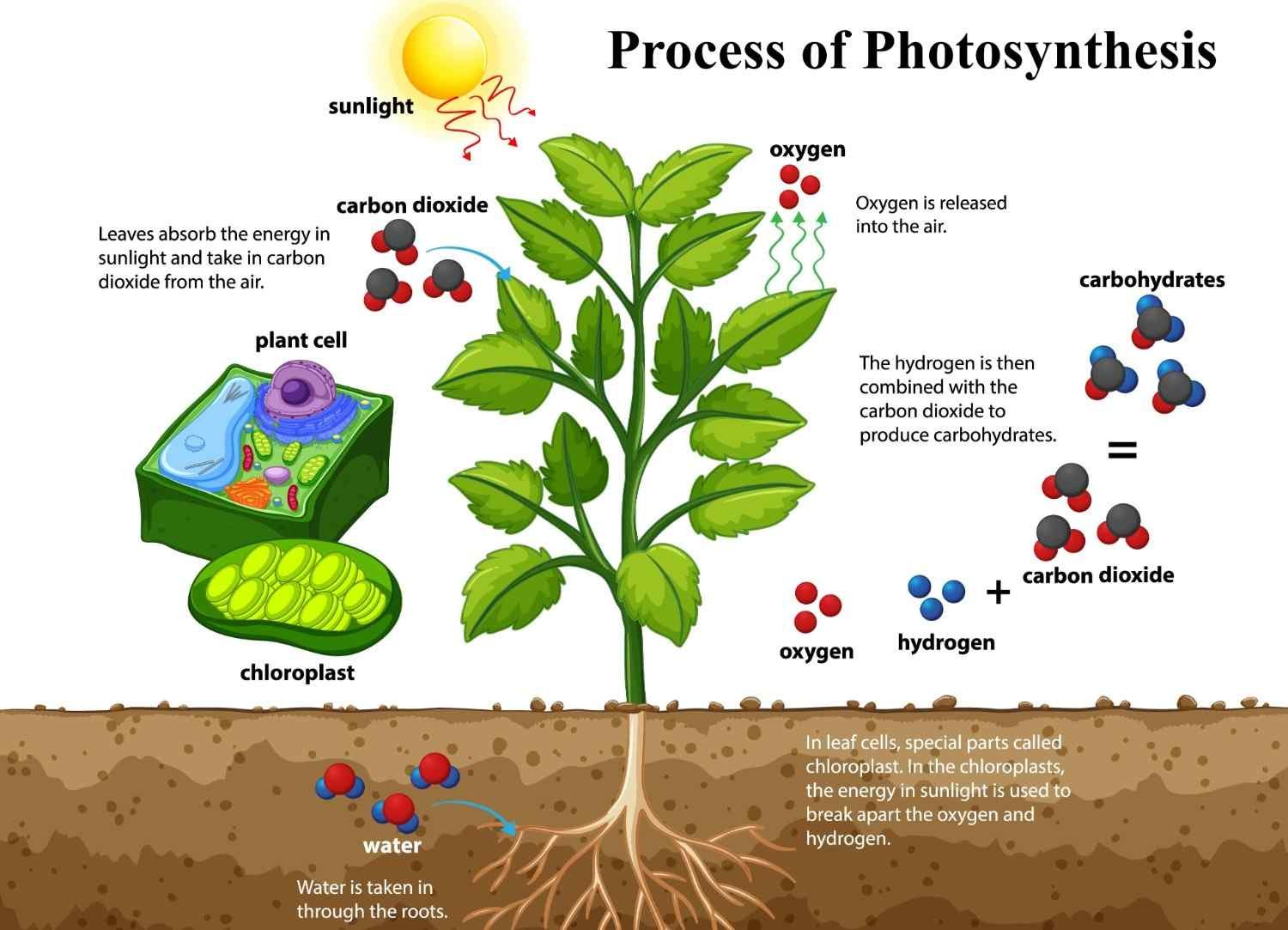
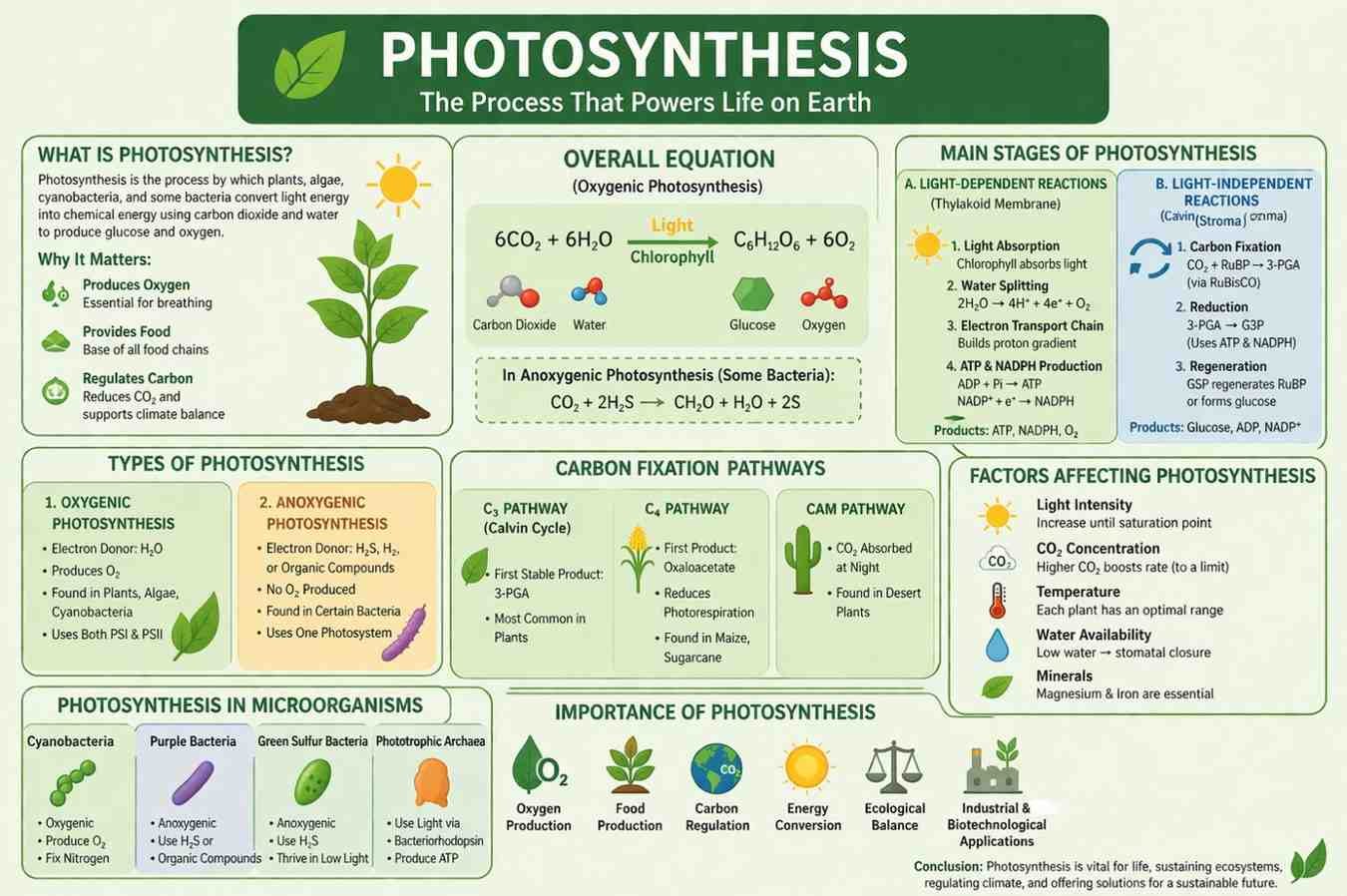
- Photosynthesis is a basic biological mechanism by which green plants, algae, cyanobacteria, and some photosynthetic bacteria convert light energy from the sun into organic molecules (mostly carbohydrates) using carbon dioxide (CO2) and water (H2O).
- In this process, light energy is transformed into chemical energy, which is held in the bonds of glucose and other organic compounds. In oxygenic photosynthesis, oxygen (O2) is produced as a by-product.
This mechanism is necessary for sustaining life on Earth since it:
- Produces the oxygen necessary for breathing.
- Provides the majority of the energy for the vast majority of ecosystems.
- By absorbing atmospheric CO2, it regulates the carbon cycle.
Photosynthesis Equation
The overall chemical equation of oxygenic photosynthesis is:
6CO₂ + 6H₂O → C₆H₁₂O₆ + 6O₂
- In the presence of light energy and chlorophyll pigments, six molecules of water and six molecules of carbon dioxide combine.
- Six molecules of oxygen (O2) and one molecule of glucose (C6H12O6) are produced as a result of this.
- The glucose is used by the plant for metabolic energy, and oxygen is released into the atmosphere.
- The equation for microbial photosynthesis, particularly in bacteria, depends on the electron donor.
In anoxygenic photosynthesis, for example:
CO₂ + 2H₂S → CH₂O + H₂O + 2S
- In this case, hydrogen sulfide (H2S) serves as the electron donor in place of water, and elemental sulfur (S) is produced in place of oxygen.
Stages of Photosynthesis
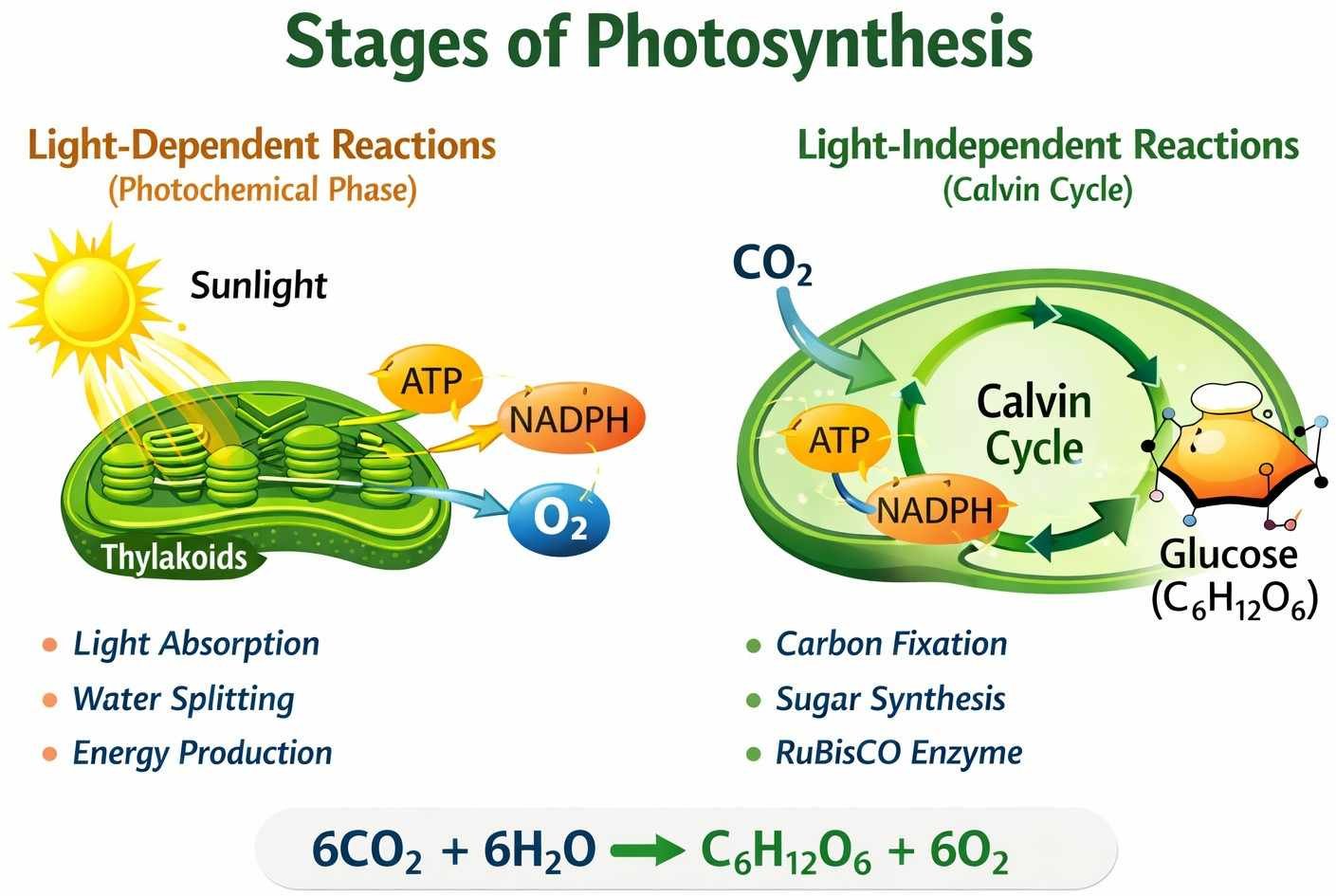
Photosynthesis occurs in two interconnected stages:
- Light-Dependent Reactions (Photochemical Phase).
- Light-Independent Reactions (Calvin Cycle).
A. Light-Dependent Reactions (Photochemical Phase)
These reactions take place in the plasma membranes of photosynthetic bacteria or in the thylakoid membranes of chloroplasts (in plants and algae) and need sunlight.
1. Light Absorption:
- Light energy is absorbed by chlorophyll and other pigments.
- The pigment molecules’ electrons are raised to higher energy levels by the energy.
2. Hydrolysis or Water Splitting
- Light energy breaks water molecules into protons (H+), electrons (e-), and oxygen gas (O2) in oxygenic organisms.
Response:
2H2O ——→ 4H+ + 4e+ + O2
3. Electron Transport Chain (ETC)
- Electrons in an excited state are transported via a chain of carriers, including plastoquinone, cytochrome complex, and ferredoxin.
- This results in a proton gradient across the thylakoid membrane.
4. Production of NADPH and ATP
- ATP synthase uses the proton gradient to catalyze the chemiosmotic reaction ADP + Pi → ATP.
- In the following step, NADPH is produced by the reduction of NADP+ by electrons.
- ATP, NADPH, and O2 are the products.
- The energy and reducing power necessary for carbon fixation in the dark reactions are provided by these products.
B. Light-Independent Reactions (Dark Reactions / Calvin Cycle)
- In photosynthetic organisms, these reactions take place in the cytoplasm or the chloroplast stroma.
- Despite the moniker “dark reactions,” they don’t always happen at night; they simply don’t need light in order to happen.
1. Fixation of CO₂ via Carboxylation
- The enzyme RuBisCO (Ribulose-1,5-bisphosphate carboxylase/oxygenase) fixes atmospheric CO2.
- 3-phosphoglycerate (3-PGA) is produced when CO2 combines with RuBP (Ribulose-1,5-bisphosphate).
2. Reduction
- ATP phosphorylates 3-PGA, which NADPH then reduces to create Glyceraldehyde-3-phosphate (G3P), a 3-carbon sugar.
3. Regeneration
- Some G3P molecules produce glucose, while others replenish RuBP to maintain the cycle.
- Products: Glucose, ADP, and NADP+, which go back to the light processes.
Cellular Structures Involved in Photosynthesis
In Plants and Algae:
- The location of photosynthesis is in the chloroplasts.
- Thylakoids: Membrane pouches filled with chlorophyll and other pigments.
- Grana: Grana are stacks of thylakoids that enhance the area available for light capture.
- Stroma: The fluid area that houses the enzymes needed for the Calvin cycle is called the stroma.
- Pigments: Chlorophyll a (main), chlorophyll b, carotenoids, and xanthophylls absorb certain light wavelengths

In Photosynthetic Microorganisms:
- Cyanobacteria: Carry out oxygenic photosynthesis like plants and have chlorophyll a.
- Purple and Green Sulfur Bacteria: Carry out anoxygenic photosynthesis using bacteriochlorophyll.
- Reaction Centers: Unique protein-pigment complexes that transform light energy into chemical energy.
- Lamellae or Chromatophores: Bacterial membrane folds where photosynthesis takes place.
Types of Photosynthesis
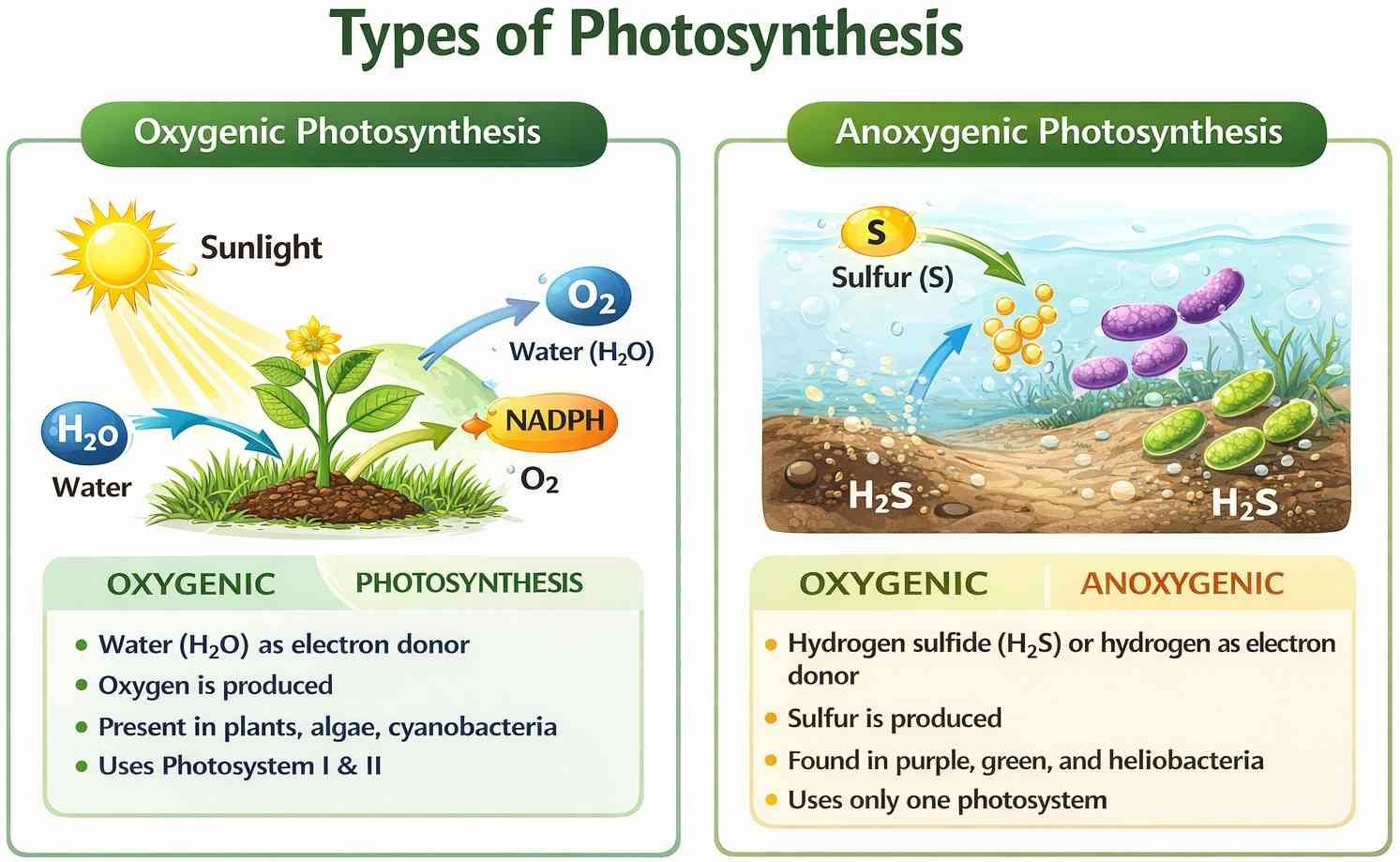
- Oxygenic Photosynthesis.
- Anoxygenic Photosynthesis.
1. Oxygenic Photosynthesis
- Water serves as the electron donor (H2O).
- Oxygen is made.
- Present in plants, algae, and cyanobacteria.
- Photosystem I (PSI) and Photosystem II (PSII) are employed.
2. Anoxygenic Photosynthesis
- Electron donor: Hydrogen sulfide (H2S), hydrogen (H2), or organic molecules.
- There is no release of oxygen.
- Found in heliobacteria, green sulfur, and purple sulfur.
- Only includes one photosystem, whether it be of the PSI or PSII kind.
Energy conversion and electron transport
- Photosystem II (PSII): Uses light to break water molecules, releasing electrons and O2.
- Electron Transport Chain (ETC): Creates a proton gradient by transferring electrons through cytochrome complexes and plastoquinone.
- Photosystem I (PSI): absorbs light and moves electrons to NADP+ to create NADPH.
- ATP Synthase: Uses the proton motive force to generate ATP (photophosphorylation).
- CO2 is fixed in the Calvin cycle using the energy produced as ATP and NADPH.
Mechanisms for Carbon Fixation
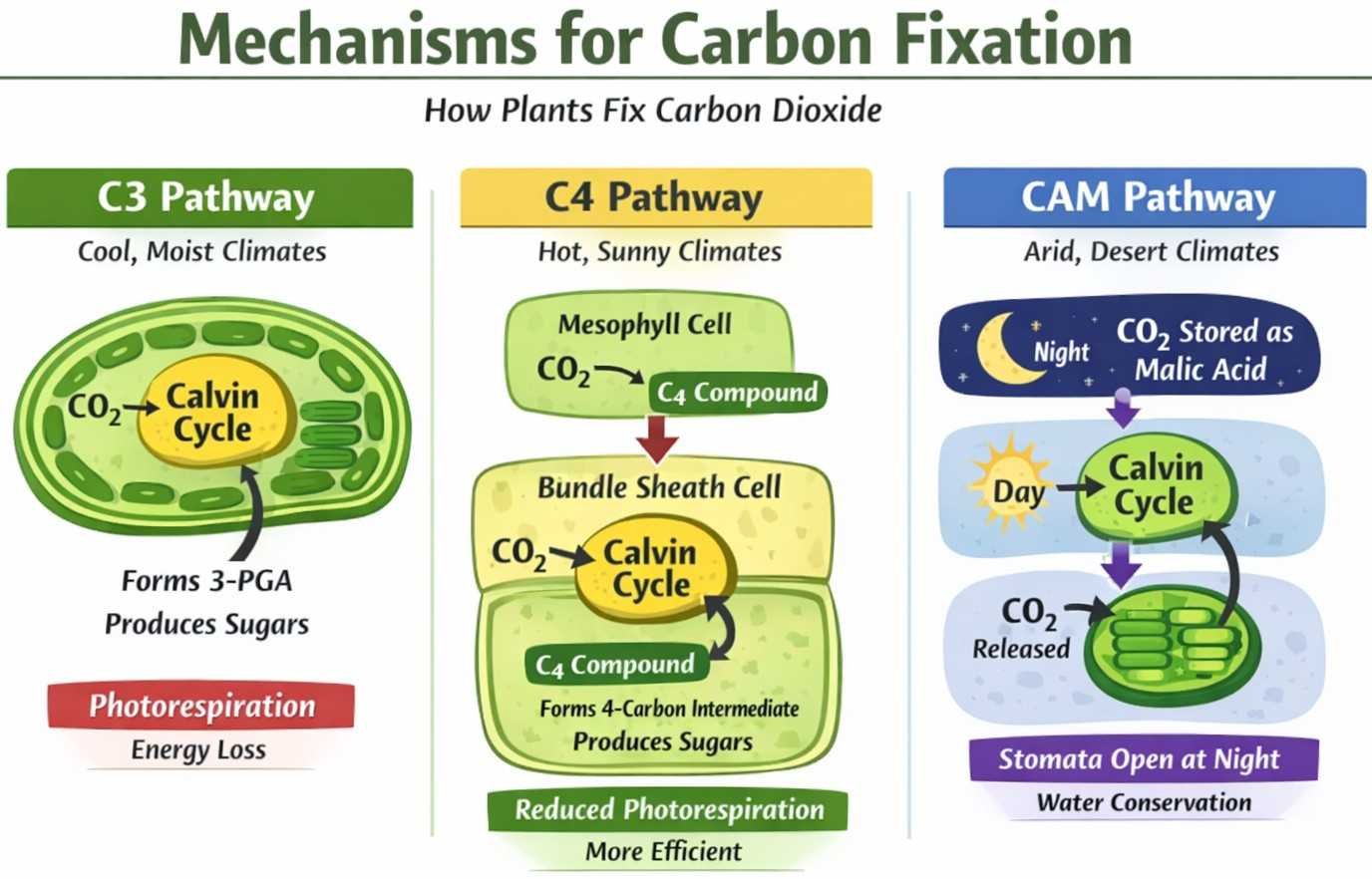
C3 Pathway (Calvin Cycle)
- The first stable molecule is 3-phosphoglycerate (3-PGA).
- Most plants contain it.
C4 Pathway
- Firstly, CO2 is converted into oxaloacetate, a molecule with four carbon atoms.
- Modified for warm weather, such as maize and sugarcane.
- Lowers photorespiration.
CAM Pathway
- It is present in desert flora, such as cacti.
- At night, CO2 is absorbed to save water, and throughout the day, it is used for photosynthesis.
Factors Affecting Photosynthesis
- Light Intensity: Up until the saturation point, the rate increases with the intensity of light.
- CO2 Concentration: Photosynthesis increases with increasing CO2 concentrations until it is constrained by other variables.
- Temperature: Every plant has an ideal temperature range; too high or low decreases the rate.
- Water Availability: CO2 intake is decreased by stomatal closure caused by a deficiency.
- Magnesium and iron are essential for enzyme activity and chlorophyll synthesis.
Importance of Photosynthesis
1. Oxygen Production
- The main source of atmospheric oxygen on Earth is photosynthesis.
- Photolysis is the process by which water molecules (H₂O) are broken down during the light-dependent reactions, releasing oxygen (O₂) as a byproduct.
- Oxygen is necessary for aerobic respiration, which is the process through which most living things (including humans, animals, and many microbes) create energy.
- The oxygen content in the atmosphere would drop very quickly without photosynthetic organisms like plants, algae, and cyanobacteria, making life impossible.
2. Food Production
- The basis of the world’s food chain is photosynthesis.
- Carbon dioxide (CO₂) and water (H₂O) are transformed by green plants and autotrophic microbes into glucose (C₆H₁₂O₆) and other carbohydrates through this process.
- These carbs are the main source of nutrition for herbivores, as well as, indirectly, for carnivores and omnivores.
- Organic molecules created by autotrophs are essential to heterotrophic microbes as well.
- As a result, photosynthetic organisms are the ultimate source of food and energy for all life forms on Earth.
3. Carbon Regulation
- Maintaining the biosphere’s carbon balance depends heavily on photosynthesis. It serves as a natural carbon sink by sequestering atmospheric carbon dioxide into organic molecules, thereby lowering the total quantity of CO₂.
- Since too much CO₂ is a primary greenhouse gas that causes heat to be trapped in the Earth’s atmosphere, this procedure aids in reducing climate change and global warming.
- The significance of protecting green vegetation and phytoplankton communities is highlighted by the rise in CO2 levels caused by widespread deforestation and decreased photosynthetic activity.
4. Energy Conversion
- The most effective mechanism in nature for converting energy is photosynthesis. It absorbs solar energy and transforms it into glucose and other organic molecules, which are forms of chemical energy.
- Respiration is the process by which this stored chemical energy is later released and transmitted up the food chain.
- As a result, practically all biological activities, including growth, reproduction, movement, and metabolism, are powered by photosynthesis. It basically converts sunshine into energy that supports life.
5. Ecological Balance
- By maintaining a balance between the cycles of oxygen and carbon dioxide in the environment, photosynthesis helps to sustain ecological balance.
- The dynamic equilibrium necessary for the stability of an ecosystem is produced by the release of oxygen and intake of CO2 by plants during photosynthesis, as well as the release of CO2 and consumption of oxygen by microbes and animals during respiration.
- Moreover, by acting as the main producers for marine food webs, photosynthetic species like phytoplankton in seas sustain aquatic ecosystems.
6. Industrial and Biotechnological Role
Applications of photosynthesis are extensive in sustainable development and industrial biotechnology.
- Biofuels made from algae: Photosynthetic microalgae are able to transform sunlight and CO2 into lipids and carbohydrates, which may then be used to manufacture biogas, biodiesel, and bioethanol, all of which are renewable substitutes for fossil fuels.
- Bioplastics: Some photosynthetic organisms, such as microalgae and cyanobacteria, produce polyhydroxyalkanoates (PHAs) and other biopolymers that may be converted into biodegradable plastics.
- Carbon Capture: Utilizing algal and plant-based technologies, atmospheric CO2 is captured for industrial applications or environmental clean-up.
- Pharmaceuticals and Nutraceuticals: In addition to pigments, vitamins, and antioxidants, which are utilized in the pharmaceutical, food, and cosmetic sectors, photosynthetic creatures also create other beneficial substances.
7. Global Environmental and Evolutionary Significance
- Photosynthesis has had a significant impact on the atmosphere and biosphere of Earth for billions of years.
- Around 2.4 billion years ago, cyanobacteria caused the great oxygenation event, which converted the early reducing atmosphere into an oxygen-rich one, allowing aerobic life forms and complicated multicellular life to develop.
- Even today, the climate of the planet is regulated by the photosynthetic activity of terrestrial plants and marine phytoplankton, which also maintains biodiversity and supports life throughout ecosystems.
Photosynthesis in Microorganisms
- Many microbes are capable of converting light energy into chemical energy through photosynthesis, not just plants and algae.
- By participating in carbon fixation, oxygen production, nutrient cycling, and even biotechnological breakthroughs, these photosynthetic microbes perform an essential function in the world’s ecosystems.
- The major classes are phototrophic archaea, green sulfur bacteria, purple bacteria, and cyanobacteria.
1. Cyanobacteria
- Cyanobacteria are oxygenic photosynthetic prokaryotes that carry out photosynthesis in a manner comparable to that of higher plants.
- As light-absorbing pigments, they include chlorophyll a, carotenoids, and phycobilins.
- The process takes place in particular internal membranes known as thylakoids, which are similar to those found in chloroplasts in plants.
Essential Features:
- Oxygenic photosynthesis, which releases oxygen, is the type.
- Water serves as the electron donor.
- Pigments: Chlorophyll a and phycobiliproteins (phycocyanin, phycoerythrin).
- Products: Oxygen, NADPH, ATP, and glucose.
- Species examples include Spirulina, Synechococcus, Nostoc, and Anabaena.
Ecological and Biotechnological Significance:
- They were major producers of atmospheric oxygen, and they were responsible for the Great Oxygenation Event that occurred about 2.4 billion years ago.
- As primary producers in aquatic ecosystems, they serve as the foundation for several food chains.
- Numerous species contribute to soil fertility by fixing atmospheric nitrogen (N2) via unique cells known as heterocysts.
- Used in the biotechnology sector to create biofuels (from lipid and carbohydrate production), pigments (such as phycocyanin), bioplastics, and biofertilizers.
2. Purple Bacteria
- Purple bacteria are anoxygenic phototrophic bacteria, which means they carry out photosynthesis without producing oxygen.
- Purple sulfur bacteria (PSB) and purple non-sulfur bacteria (PNSB) are among the members of the Proteobacteria family.
Fundamental Features:
- Anoxygenic photosynthesis (no O2 evolution) is the process.
- Hydrogen sulfide (H2S), elemental sulfur (S0), or organic molecules (such as succinate or malate) serve as electron donors.
- Pigments: Carotenoids, bacteriochlorophyll a, or b.
- Photosystem: Only one photosystem, which is comparable to PS I.
- Habitat: Anaerobic or Microaerophilic aquatic environments, such as sulfur-rich sediments, ponds, or standing water.
- Chromatium, Rhodobacter, and Rhodospirillum are a few examples of the species.
Significance:
- Contribute to the sulfur cycle by oxidizing hydrogen sulfide into elemental sulfur or sulfate.
- Some purple non-sulfur bacteria are utilized in bioremediation, wastewater treatment, and hydrogen gas generation via photofermentation processes.
- Because of their metabolic variety, they are possible candidates for biofuel and biohydrogen production.
3. Green Sulfur Bacteria
- Similar to green sulfur bacteria, they are anoxygenic phototrophs that carry out photosynthesis without producing oxygen.
- They are members of the Chlorobi phylum and have chlorosomes, which are specialized light-collecting structures that enable them to survive in very low light environments.
Important Features:
- Kind: Anoxygenic photosynthesis.
- Hydrogen sulfide (H2S) or other reduced sulfur molecules serve as the electron donor.
- Colors: Bacteriochlorophyll c, d, or e (found in chlorosomes).
- Location: Occurs in hot springs or in deep water sediments where there is little light but a lot of sulfur.
- Species examples: Chlorobium tepidum, Chlorobaculum limnaeum.
Importance:
- Play a crucial role in the sulfur metabolism process by transforming hazardous hydrogen sulfide into less dangerous sulfur or sulfate compounds.
- Help with carbon fixation in anaerobic and light-depleted environments, which sustains microbial food chains in harsh conditions.
- Their capacity to make use of light and inorganic molecules makes them potentially useful in bioremediation and bioenergy.
4. Phototrophic Archaea
- Even though archaea are phototrophic—meaning they can capture light energy for metabolic use—they do not photosynthesize in the strictest sense since they lack chlorophyll and do not fix CO₂.
Key Example:
- The pigment-protein complex bacteriorhodopsin, found in Halobacterium salinarum, functions as a light-driven proton pump.
- Bacteriorhodopsin moves protons (H+) across the cell membrane when exposed to light, creating a proton motive force that is utilized to manufacture ATP.
Importance:
- Phototrophic archaea are an example of energy conversion from light in harsh environments like hypersaline lakes, despite their lack of participation in carbon fixation.
- They highlight the range of light-using mechanisms that exist in microbes from an evolutionary perspective.
Ecological Roles of Photosynthetic Microorganisms
- Primary Producers: By creating organic materials from inorganic chemicals, they lay the groundwork for aquatic food webs.
- Carbon Fixation: Keep the world carbon cycle by converting atmospheric or dissolved CO2 into organic carbon.
- Nitrogen Cycling: Certain species, such as cyanobacteria, fix nitrogen, which improves soil fertility and aids in plant development.
- Purple and green sulfur bacteria in sulfur cycling transform H₂S into sulfate, detoxifying the environment.
- Oxygen Production: Cyanobacteria produce a lot of O₂, which supports aerobic ecosystems.
Uses of Biotechnology
- Biofuel production: Microalgae and photosynthetic bacteria transform sunlight and CO2 into biodiesel, bioethanol, and biohydrogen.
- Bioplastics: Cyanobacteria and other phototrophs produce polyhydroxyalkanoates (PHAs), which are biodegradable plastic precursors.
- Biofertilizers: Nitrogen-fixing cyanobacteria (e.g., Anabaena, Nostoc) enhance soil fertility in rice fields and other crops.
- Bioremediation: Some species can absorb or convert pollutants, which aids in the clean-up of polluted environments.
- Carbon Capture and Sustainability: Because of their capacity to capture CO2, they are essential instruments for addressing climate change.
Conclusion
By transforming solar energy into chemical energy stored in glucose, photosynthesis is a crucial biological mechanism that supports life on Earth. In addition to feeding every species, it also releases oxygen, which is necessary for aerobic life to exist in a balanced atmosphere.
Photosynthesis is the cornerstone of energy flow and ecological balance in both terrestrial and aquatic ecosystems because it controls the global carbon cycle and mitigates climate change via the fixation of carbon dioxide.
Photosynthetic microorganisms like cyanobacteria, purple bacteria, and green sulfur bacteria also contribute to carbon and nitrogen cycling, oxygen production, and nutrient regeneration, thereby expanding these functions.
Photosynthetic organisms are not just ecologically significant; they also have huge promise in biotechnology, where they may be used for carbon sequestration, biofuel production, bioplastic synthesis, and biofertilizer production.
As a result, photosynthesis continues to be a fundamental natural process as well as a factor in the advancement of environmentally friendly industry and sustainable environment.
Frequently Asked Questions (FAQ)
Q1. What is photosynthesis in simple terms?
Photosynthesis is the process by which plants use sunlight to convert carbon dioxide and water into glucose and oxygen.
Q2. What is the equation of photosynthesis?
The equation is: 6CO₂ + 6H₂O → C₆H₁₂O₆ + 6O₂
Q3. Where does photosynthesis occur?
It occurs in chloroplasts, specifically in thylakoids (light reaction) and stroma (Calvin cycle).
Q4. What are the two stages of photosynthesis?
- Light-dependent reactions.
- Light-independent reactions (Calvin cycle).
Q5. What is the difference between C3, C4, and CAM plants?
- C3: Most common pathway.
- C4: Reduces photorespiration.
- CAM: Fixes CO₂ at night.
Q6. Do bacteria perform photosynthesis?
Yes, some bacteria like cyanobacteria perform oxygenic photosynthesis, while others perform anoxygenic photosynthesis.
Q7. Why is photosynthesis important?
It produces oxygen, provides food, regulates CO₂, and supports all ecosystems.
Q8. What are the types of photosynthesis?
Oxygenic and anoxygenic photosynthesis.
Reference and Sources
- https://www.ncbi.nlm.nih.gov/books/NBK9861/
- https://education.nationalgeographic.org/resource/photosynthesis/
- https://www.britannica.com/science/photosynthesis
- https://ssec.si.edu/stemvisions-blog/what-photosynthesis
- https://www.sciencedirect.com/topics/neuroscience/photosynthesis
- https://www.nature.com/scitable/topicpage/photosynthetic-cells-14025371/
- https://pmc.ncbi.nlm.nih.gov/articles/
Also Read
