Application of Microbiology in Daily Life: Examples, Uses & Importance
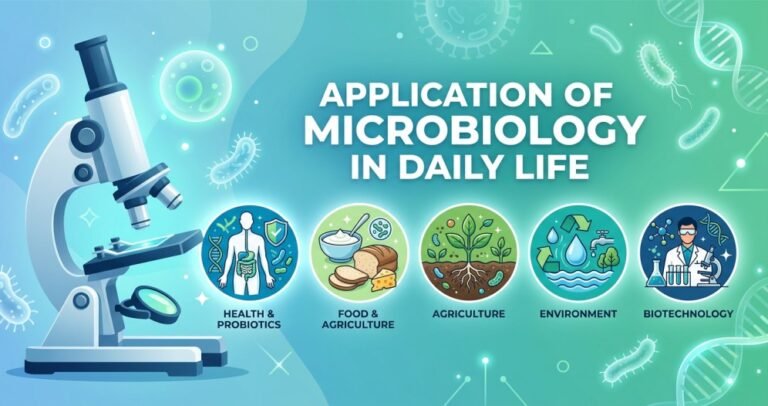
Application of Microbiology: Introduction The scientific study of microscopic organisms like bacteria, fungi, protozoa, algae, and viruses, which are invisible …

Microbiology is the scientific study of microorganisms, which are tiny, often microscopic organisms such as bacteria, viruses, fungi, protozoa, and algae. It plays a central role in medicine, agriculture, food production, biotechnology, and environmental science. Microbiology is the branch of biology that deals with microorganisms—unicellular, multicellular, or acellular organisms—focusing on their structure, function, classification, growth, interactions, and roles in the environment.
Application of Microbiology: Introduction The scientific study of microscopic organisms like bacteria, fungi, protozoa, algae, and viruses, which are invisible …

Introduction to Starch Hydrolysis Test The starch hydrolysis test is a differential microbiological technique used to detect an organism’s ability …
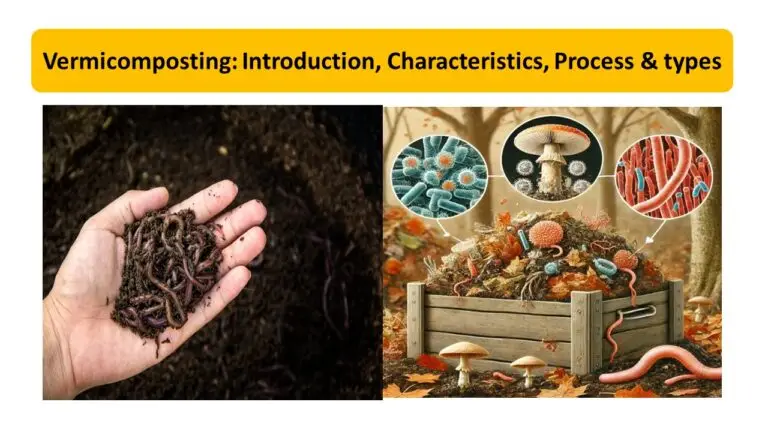
Vermicomposting Introduction Vermicomposting transforms organic waste into nutrient-rich compost by using earthworms and microorganisms. Vermicast, often referred to as worm castings, …

Introduction Extremophiles are tiny organisms that can live in places previously thought to be impossible for any form of life. …
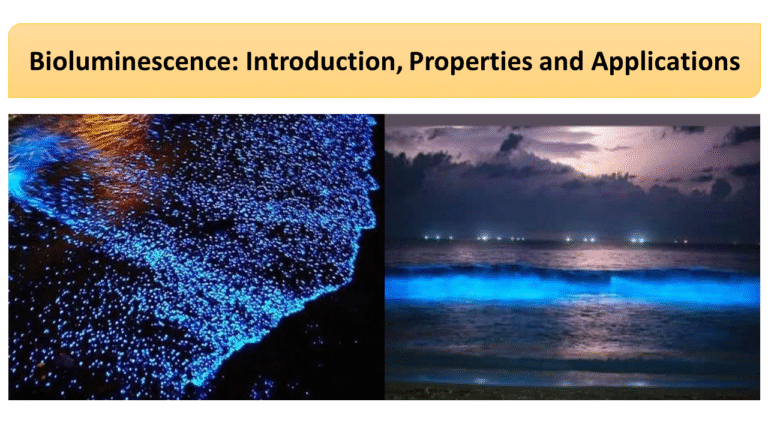
Introduction Bioluminescence refers to the phenomenon where living beings can naturally create and emit light. This occurrence is a kind …

Introduction The gastrointestinal (GI) tract in humans is a specialized and adaptable organ system. It not only plays a crucial …

Introduction The term PGPR (Plant growth-promoting rhizobacteria) was first used by Kloepper and Schroth to describe soil naturally occurring rhizobacteria. …

Introduction In past few years, directed evolution emerged as the most efficient and effective protein engineering methods. It has many …

Introduction Hormones are chemical messenger and usually organic in nature that are produced by source cell and regulate the cellular …

Introduction Klebsiella are gram-negative, nonsporing, non-motile bacilli that grow well on ordinary media, produce pink mucoid colonies on MacConkey’s agar. …