
Introduction
Plastics play a major role in modern life because they offer flexibility, durability, and chemical stability. Manufacturers produce traditional plastics from petroleum-based sources such as crude oil and natural gas. As a result, industries widely use plastics in packaging, textiles, electronics, and consumer goods.
However, these plastics create serious environmental and health concerns. For instance, additives like bisphenol-A and phthalates increase toxicity. Moreover, conventional plastics resist degradation, which leads to long-term pollution in soil and water. Consequently, plastic waste harms wildlife, disrupts ecosystems, and contaminates food chains.
Therefore, researchers now focus on sustainable alternatives. In this context, bioplastics from algae and bacteria provide a promising eco-friendly solution.
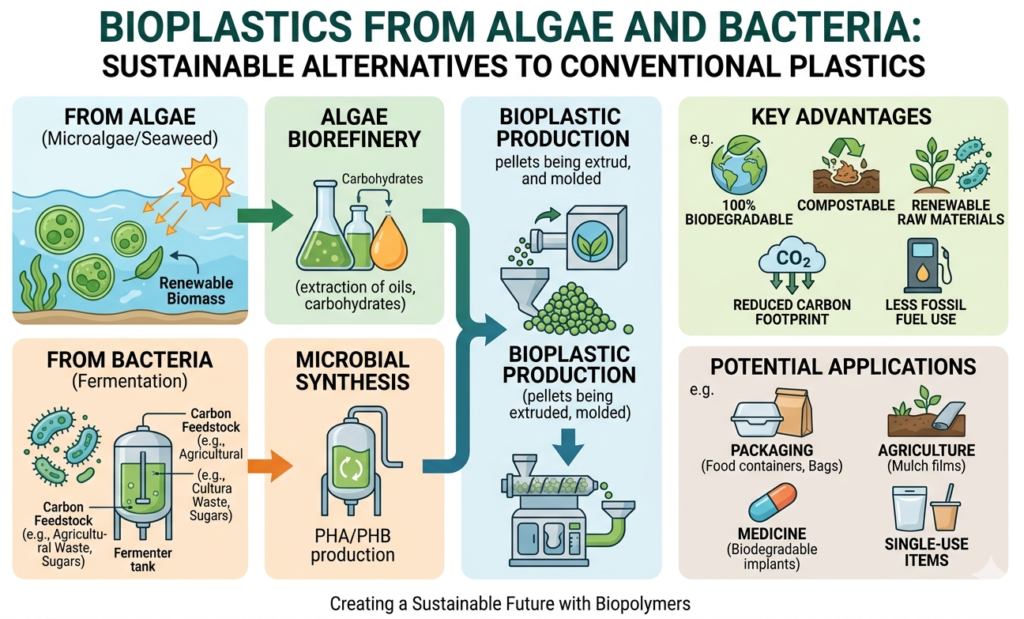
Sources of Bioplastics
1. Plant-Based Sources
Plants provide abundant raw materials such as:
- Corn starch
- Wheat starch
- Sugarcane bagasse
- Cassava
- Vegetable oils
These materials undergo fermentation or chemical processing to form bioplastics. Additionally, combining plant fibers improves strength and flexibility. For example: sugarcane bagasse enhances tensile properties, while cassava starch produces biodegradable films.
2. Animal-Based Sources
Animal by-products also contribute to bioplastic production. For instance:
- Collagen and gelatin improve flexibility.
- Keratin enhances strength.
- Chitin (from crustaceans) converts into chitosan.
Moreover, chitosan-based plastics show antimicrobial properties and excellent transparency. Therefore, industries use them in food packaging and biomedical applications.
3. Microbial Sources
Microorganisms play a crucial role in producing bioplastics. Bacteria, fungi, and algae synthesize polymers like:
- Polyhydroxyalkanoates (PHAs).
- Polyhydroxybutyrate (PHB).
These polymers serve as energy storage compounds. Scientists optimize conditions such as nutrients and temperature to maximize production.
Bioplastics from Algae
Algae stand out as an excellent source for bioplastics. They grow rapidly, require minimal land, and thrive in wastewater or saline environments. Therefore, they offer a sustainable and cost-effective solution.
Algae contain valuable biopolymers such as:
- Starch
- Cellulose
- Agar
- Alginate
These compounds convert into biodegradable plastics used in packaging, agriculture, and medical fields.
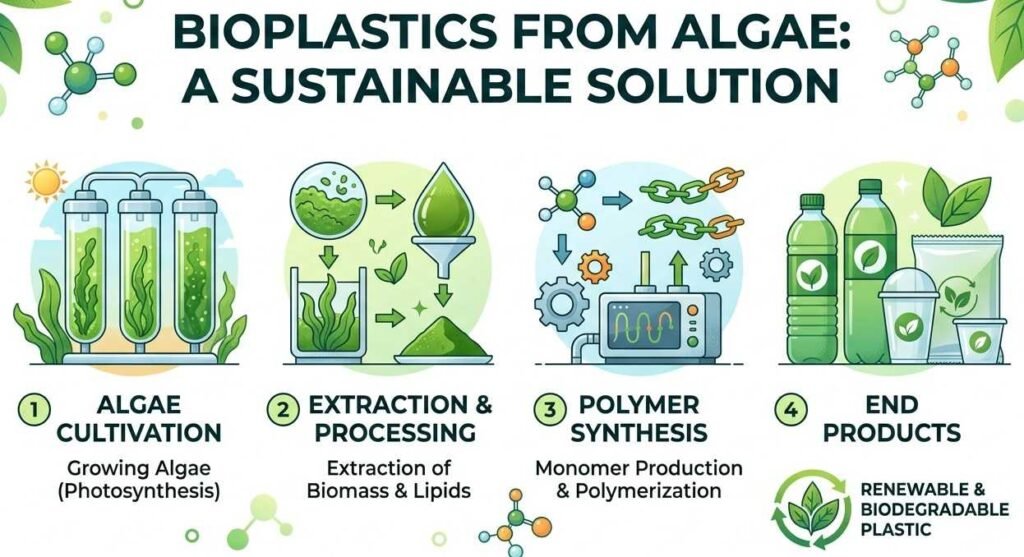
Advantages of Algae-Based Bioplastics
- Reduce carbon emissions.
- Support wastewater treatment.
- Provide high mechanical strength.
- Require fewer resources than crops.
Microalgae Used in Bioplastics
1. Spirulina
Spirulina produces high-quality biopolymers without requiring complex processing. Additionally, it shows excellent tensile strength and flexibility. Therefore, industries use it in sustainable plastic production.
2. Chlorella
Chlorella offers strong cell walls and thermal stability. Moreover, it improves mechanical properties when used in composites. As a result, it serves as a cost-effective bioplastic source.
Biopolymers from Microorganisms
1. Polyhydroxyalkanoates (PHAs)
- PHAs are biodegradable polymers produced by bacteria and algae. They resist UV radiation and oxygen permeability. Therefore, they serve as excellent alternatives to petroleum plastics.
2. Polyhydroxybutyrate (PHB)
- PHB is a widely used biopolymer. It provides strong barrier properties and supports medical applications such as sutures and implants.
Cultivation of Microalgae
Scientists cultivate microalgae using controlled systems. These systems allow optimization of growth conditions such as:
- Light intensity.
- Temperature.
- Nutrient availability.
Consequently, researchers increase biomass production and improve bioplastic yield.
Production Systems
1. Open Systems (Raceway Ponds)
- Lower cost.
- Easier maintenance.
- Higher contamination risk.
2. Closed Systems (Photobioreactors)
- Better control.
- Higher productivity.
- Expensive setup.
Thus, industries select systems based on cost and efficiency requirements.
Bioplastics from Bacteria
Bacteria produce a wide range of polymers through metabolic processes. For example:
- Pseudomonas produces PHAs.
- Bacillus produces polyglutamic acid.
- Xanthomonas produces xanthan gum.
These polymers find applications in food, pharmaceuticals, and biotechnology.
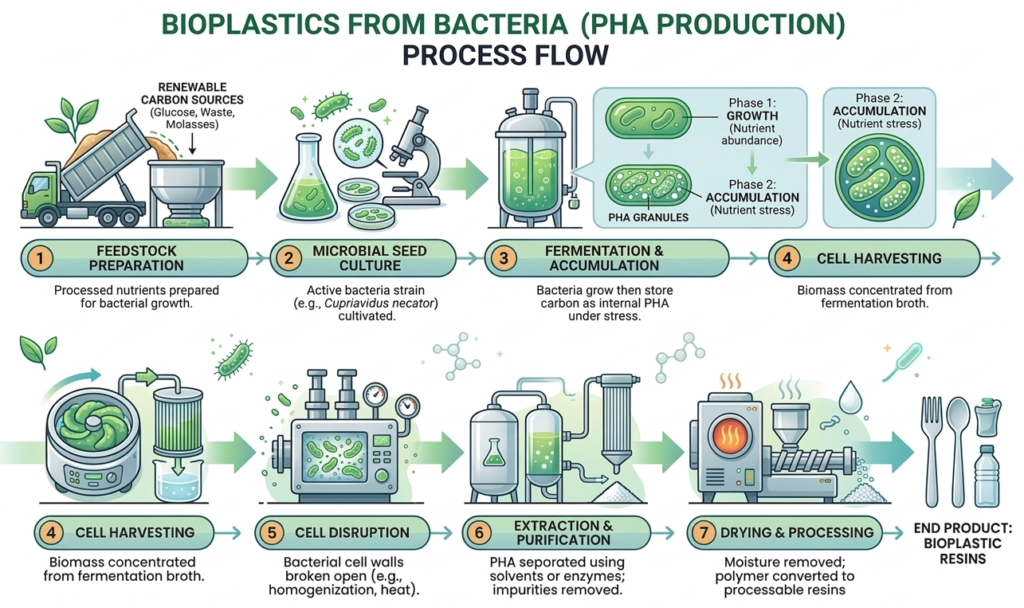
Synthesis Process of Bacterial Bioplastics
The production process includes:
- Strain selection.
- Genetic modification.
- Substrate preparation.
- Fermentation.
- Polymer extraction and purification.
Additionally, factors like pH, temperature, and oxygen influence production efficiency.
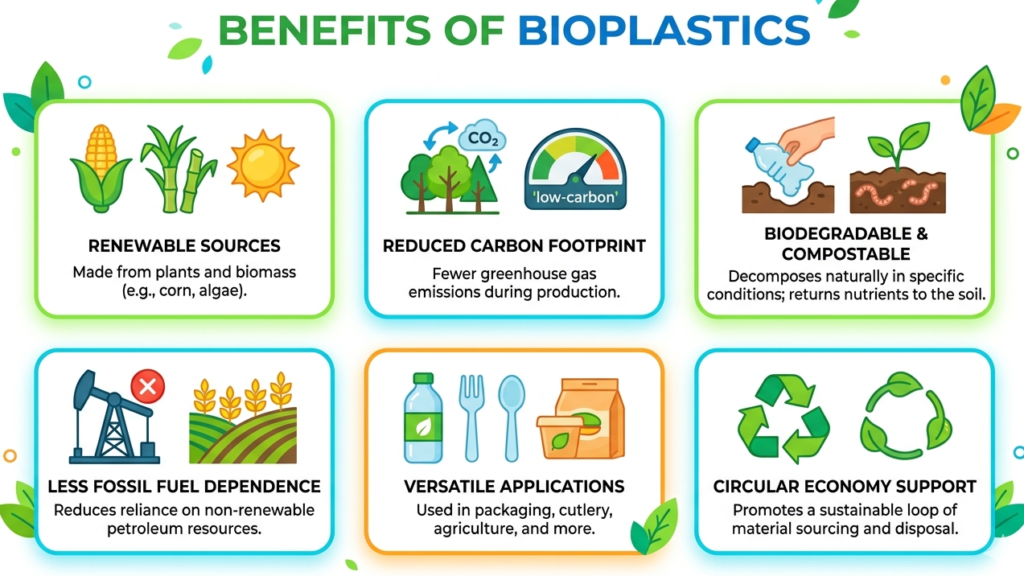
Benefits of Bioplastics
Bioplastics offer several advantages:
- Reduce environmental pollution.
- Lower carbon emissions.
- Support sustainable development.
- Provide medical applications (drug delivery, implants).
- Improve food packaging safety.
- Promote biodegradable consumer products.
Moreover, industries increasingly adopt bioplastics due to strict environmental regulations, especially in the USA.
Conclusion
Bioplastics from algae and bacteria provide a sustainable alternative to conventional plastics. Algae offer rapid growth and carbon capture benefits, while bacteria enable efficient polymer production through fermentation.
However, challenges such as high production costs and scalability still exist. Nevertheless, advancements in biotechnology, genetic engineering, and circular bioeconomy models continue to improve feasibility.
Therefore, as environmental awareness increases, bioplastics will play a critical role in reducing plastic pollution and shaping a sustainable future.
Future Perspective
Researchers are developing advanced microbial strains to enhance production efficiency. Additionally, waste-to-bioplastic technologies reduce costs and improve sustainability.
Furthermore, stricter environmental policies in countries like the United States will accelerate adoption. As a result, bioplastics will become a key component of green technology and industrial innovation.
Frequently Asked Questions (FAQs)
Q1. What are bioplastics made from algae and bacteria?
Bioplastics from algae and bacteria are biodegradable plastics produced using natural polymers like PHA and PHB synthesized by microorganisms.
Why are algae used for bioplastics?
Algae grow quickly, require fewer resources, and produce valuable biopolymers, making them ideal for sustainable plastic production.
Q3. What is PHA in bioplastics?
PHA (Polyhydroxyalkanoate) is a biodegradable polymer produced by bacteria and widely used as an alternative to conventional plastics.
Q4. Are bacterial bioplastics eco-friendly?
Yes, bacterial bioplastics are biodegradable, non-toxic, and reduce dependence on fossil fuels.
Q5. What are the main challenges of bioplastics?
High production costs, scalability issues, and limited industrial infrastructure remain key challenges.
Reference and Sources
Also Read
- Application of Microbiology in Daily Life: Examples, Uses & Importance
- Agriculture microbiology: Introduction, Function and interaction
- Probiotics: Benefits for Your Gut Health
- Photosynthesis: Definition, Steps, Equation, Types & Importance (Complete Guide)
- Food Poisoning: Causes, Common Bacteria, Symptoms & Prevention
