
Introduction
Food poisoning, also known as foodborne illness, is a common yet preventable public health issue caused by consuming contaminated food or water. Contamination may occur due to harmful microorganisms such as bacteria, viruses, parasites, or toxins produced by them. These pathogens can enter the food chain at any stage—from production and processing to preparation and storage.
Globally, millions of people are affected by food poisoning each year, making it a major concern in food safety, microbiology, and public health sectors. The symptoms may range from mild gastrointestinal discomfort to severe complications, depending on the type of pathogen, dose, and individual immunity.
Common Bacteria That Cause Food Poisoning
| Bacterium | Typical food sources | Mode / mechanism | Distinctive features / risk |
| Salmonella spp. | Poultry, eggs, dairy, raw vegetables | Invades intestinal mucosa, produces inflammatory response | Many serotypes; often causes diarrhea, fever |
| Escherichia coli (especially O157:H7 and other shiga-toxin producers) | Undercooked beef, raw produce, contaminated water | Produces shiga toxins → damages intestinal lining & can cause hemolytic uremic syndrome (HUS) | Can cause bloody diarrhea; serious in children |
| Listeria monocytogenes | Soft cheeses, deli meats, unpasteurized milk, refrigerated ready-to-eat foods | Can grow at low temperatures, crosses placenta / central nervous system | High risk in pregnancy → miscarriage, neonatal sepsis |
| Clostridium perfringens | Meats, gravies, stews kept at room temp | Produces enterotoxin during sporulation in intestines | Often linked with large batches of food held warm |
| Staphylococcus aureus | Creams, salads, sandwiches handled by people | Preformed toxins (heat-stable) cause rapid nausea/vomiting | Symptoms appear quickly (few hours) |
| Clostridium botulinum | Improperly canned or preserved foods, low-acid foods in anaerobic conditions | Botulinum toxin blocks nerve transmission → paralysis | Rare but life-threatening |
| Clostridium botulinum | Improperly canned or preserved foods, low-acid foods in anaerobic conditions | Botulinum toxin blocks nerve transmission → paralysis | Rare but life-threatening |
The Science Behind Food Poisoning
- Food poisoning is caused by the introduction of dangerous microbes or poisons into the body through contaminated food or water.
- It primarily occurs through two methods: infection by living pathogens or intoxication by pre-formed toxins.
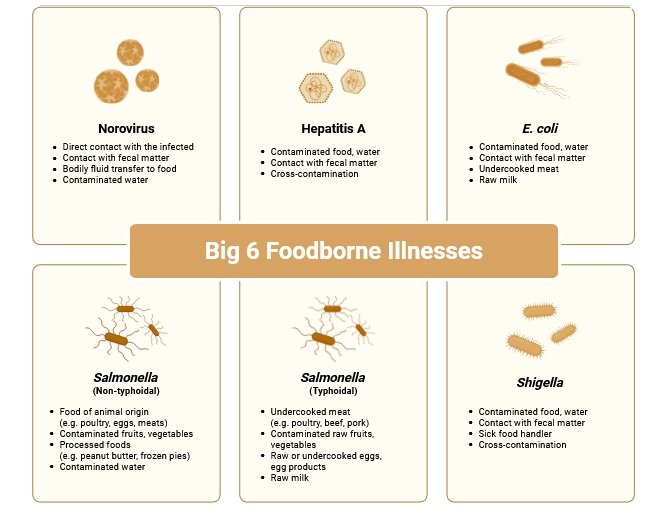
- Pathogenic bacteria such as Salmonella, E. coli, Listeria, and Campylobacter develop in the intestine, attack tissues, and induce inflammation.
- Bacterial toxins like those produced by Bacillus cereus and Staphylococcus aureus interfere with the function of the intestines, resulting in immediate vomiting and nausea.
- Pathogens are able to survive, adhere to host cells, and inflict damage thanks to virulence factors such as adhesins, fimbriae, poisons, and spore formation.
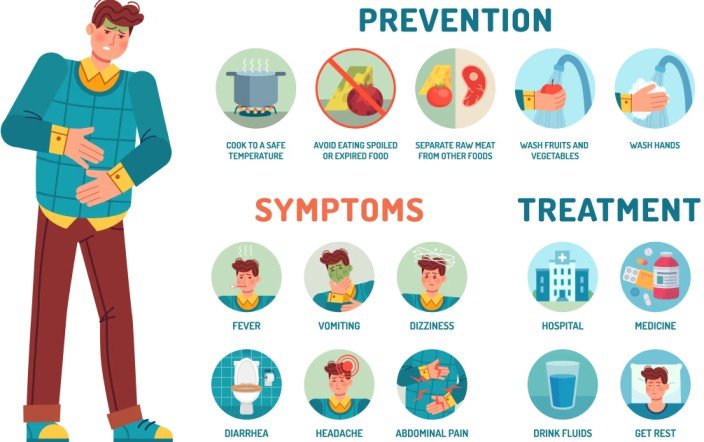
- Typical symptoms include diarrhea, nausea, vomiting, abdominal cramps, and dehydration. Severe cases can result in issues such as kidney or neurological system involvement.
- Microbial development in food is facilitated by environmental factors like temperature (5–60°C), humidity, neutral pH, and nutrient availability.
- The risk of foodborne illness is increased by inadequate storage, under-cooking, improper food handling, and cross-contamination.
- The type and quantity of the pathogen or toxin ingested as well as the person’s immune state determine the severity.
- Effective prevention and food safety measures depend on comprehending the science underlying contamination, microbial development, and host reaction.
Food Poisoning Prevention
1. Keeping Yourself Clean
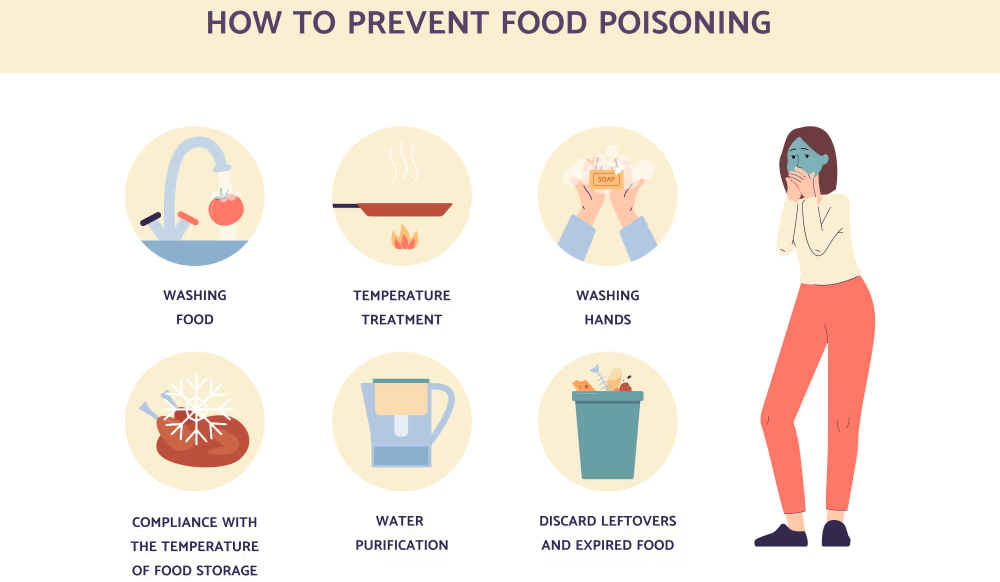
- Before handling food, after using the restroom, changing diapers, or handling pets, always wash your hands with soap and water.
- When making meals, refrain from touching your face, lips, or hair.
Use waterproof bandages to cover any cuts or wounds on your hands while you cook.
2. Cleanliness of the Kitchen
- Clean countertops, cutting boards, knives, and utensils regularly.
Regularly clean sponges, towels, and dish cloths, as they can - Serve as a breeding ground for germs.
- Do not use the same plates or utensils for raw and cooked foods without washing them first.
3. Food Storage Security
- Keep raw meat, poultry, and seafood on the refrigerator’s lower shelves to avoid drips onto other foods.
- Label leftovers with the date, and throw them out if they’ve been kept for too long.
- To prevent contamination, store dry foods such as cereals, grains, and spices in airtight containers.
4. Appropriate Preparation
- Use a food thermometer to measure the inside temperature of meat, poultry, and fish.
- Because bacteria can grow during cooling, avoid partially cooking food and finishing it later.
- If the source is unknown or untreated, boil the milk and water.
5. Reheating and Thawing Safely
- Never defrost frozen food at room temperature; instead, use the microwave, refrigerator, or cold running water.
- Before eating leftovers, reheat them to a temperature of at least 74 °C.
- Foods that have completely thawed should not be refrozen without first cooking them.
6. Avoiding Cross-Contamination
- Use different chopping boards for raw meat, poultry, fish, and veggies.
- When storing and preparing ready-to-eat meals, keep them apart from raw ingredients.
- Between handling different food kinds, wash your hands, containers, and utensils.
7. The Security of Drinks and Water
- If the water supply is unsafe, use water that has been boiled or filtered.
- Don’t use ice manufactured from untreated water.
- Fruits and vegetables, particularly those consumed raw, should be washed with clean water.
8. Shopping and buying
- When shopping, buy perishable foods last and carry them in insulated bags.
- Check the packaging for evidence of harm, leaks, or rot.
- Avoid buying foods that are past their “use by” or “best before” dates.
9. Public and Community Measures
- When eating at restaurants, street food booths, or catered events, adhere to food safety regulations.
- Raise awareness of safe food handling techniques among family members and the general public.
- Immediately report suspected foodborne disease epidemics to health officials.
10. Unique Considerations
- Foods that pose a higher risk, such raw eggs, unpasteurized milk products, and undercooked meats, should be avoided by children, people older than 70, and those with weakened immune systems.
- To promote gut health, which can aid in lowering your risk of contracting foodborne diseases, eat a nutritious diet and use probiotics.
Conclusion
Food poisoning remains a significant global health concern, but it is largely preventable with proper knowledge and hygiene practices. Understanding the science behind microbial contamination, bacterial growth, and toxin production helps individuals and industries implement effective food safety measures.
By maintaining proper hygiene, cooking food thoroughly, avoiding cross-contamination, and following safe storage practices, the risk of foodborne illness can be significantly reduced. Awareness and education are key to ensuring safer food for everyone.
Frequently Asked Questions (FAQs)
Q1. What is the most common cause of food poisoning?
Bacteria like Salmonella and E. coli are the most common causes of foodborne illness.
Q2. How quickly do food poisoning symptoms appear?
Symptoms can appear within a few hours to several days depending on the pathogen.
Q3. Can food poisoning be life-threatening?
Yes, severe cases like botulism or infections in high-risk individuals can be fatal.
Q4. What temperature kills food poisoning bacteria?
Most bacteria are killed at temperatures above 70°C during cooking.
Q5. How can food poisoning be prevented at home?
By maintaining hygiene, proper cooking, safe storage, and avoiding cross-contamination.
Q6. Who is most at risk of food poisoning?
Pregnant women, children, elderly, and immunocompromised individuals.
Reference and Sources
Also Read
- Agriculture microbiology: Introduction, Function and interaction
- Industrial Production of Ethanol – From Raw Material to Fuel Industrial Production of Ethanol – From Raw Material to Fuel
- Overview of Microbial Growth control
- Dodder: Introduction, Development of Disease, Symptoms and Control
- Microbial Contamination of Meat and Seafood: Sources, Pathogens & Control
- Food spoilage: Definition, Types, Factors and prevention
- Control Methods for Food Spoilage
